TRAVEL de GLOBE.
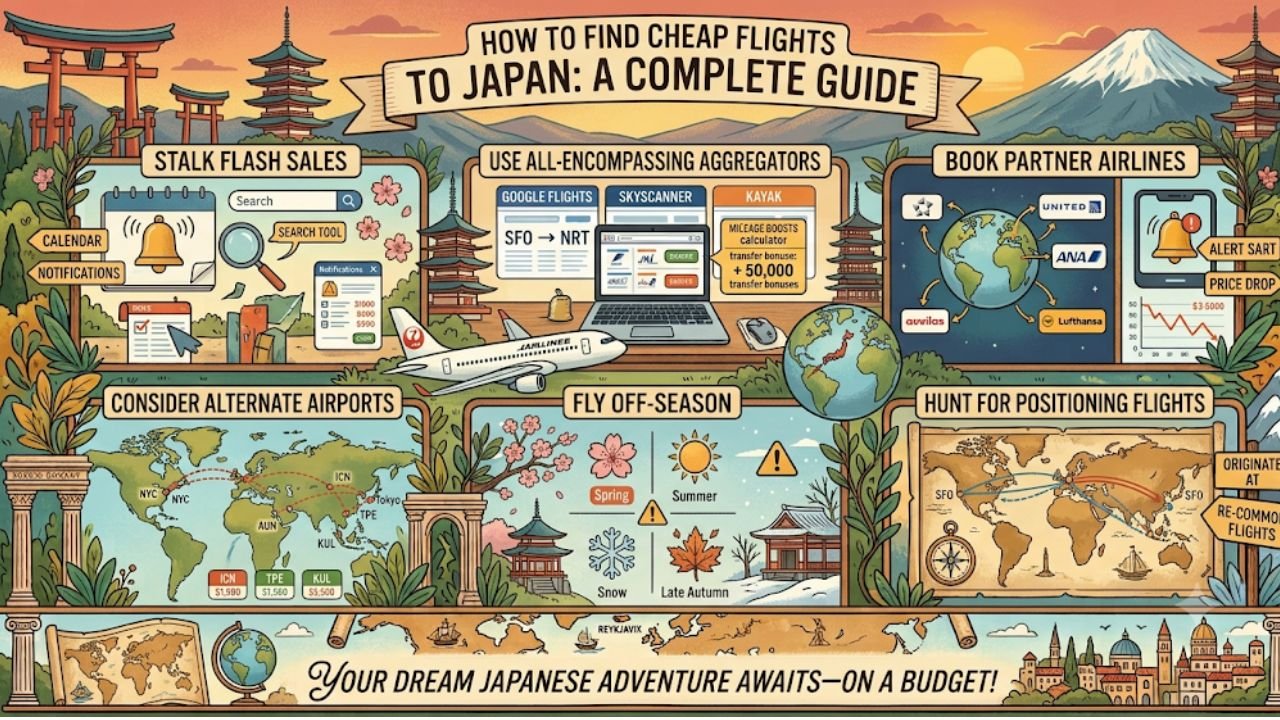

If you’ve been wondering how to find cheap flights to Japan, you’re certainly not alone. The country’s blend of ancient temples, neon-lit streets, and world-class cuisine has made it a top-tier destination, and airfare can feel like the biggest hurdle. The good news is that a ticket to Tokyo or Osaka doesn’t have to drain your savings, provided you approach the search with the right strategy. This guide lays out research-backed methods that strip away the guesswork and help you lock in a fare that leaves more yen in your pocket for ramen and railway passes.
Start with the Right Departure City
Not all airports are created equal when it comes to trans-Pacific pricing. Major West Coast hubs such as Los Angeles, San Francisco, Seattle, and Vancouver consistently offer the most competitive fares to Japan, simply because of higher seat capacity and direct competition between full-service carriers. If you live inland, it’s worth running a search that compares your home airport with a connecting flight to one of these gateways. Sometimes the savings from repositioning yourself to a coastal departure point can reach several hundred dollars, even after you factor in the short domestic hop. Open-jaw tickets—flying into Tokyo’s Narita and out of Osaka’s Kansai, for instance—can also trim costs while giving you a more efficient itinerary on the ground.
Know the Best Time to Book
International routes don’t follow the same booking rhythm as domestic ones. For flights to Japan, historical fare data suggests that the lowest prices typically appear between three and five months before departure. Booking inside that window gives you a sweet spot where airlines have released their discount inventory but haven’t yet started to ratchet prices upward as the departure date nears. A study by CheapAir found that the average best day to book a flight to Asia falls around four months out, and Japan aligns closely with that curve. Waiting until the last minute rarely pays off; fares in the final three weeks can jump by 30% or more. Conversely, buying ten months ahead often means you’re paying a premium for the privilege of an early reservation. Set a reminder on your calendar to start tracking prices about six months in advance, and be ready to act when you see a dip.
Be Flexible with Dates and Airports
Flexibility is the single most powerful lever you can pull. A departure on a Tuesday or Wednesday almost always undercuts a Friday or Saturday flight, sometimes by 15% to 20%. The same logic applies to your return leg. Even shifting your trip by a single day can alter the fare noticeably. Tools like Google Flights’ date grid and price graph make it effortless to spot the cheapest combination. When it comes to arrival airports, Tokyo serves two major international gateways: Narita and Haneda. Haneda is closer to the city centre, but Narita often hosts a wider range of budget and foreign carriers, which can mean lower fares. Also, don’t ignore flying into Osaka if your journey includes Kyoto or western Japan; a direct international flight to Kansai International Airport occasionally undercuts a Tokyo-bound ticket, and Japan’s superb rail network makes it easy to connect elsewhere.
Choose Budget Airlines and Routes
The landscape of low-cost carriers flying to Japan has evolved. Zipair, a subsidiary of Japan Airlines, now operates long-haul routes from Honolulu, Los Angeles, San Jose, and San Francisco to Tokyo-Narita, offering a stripped-back business class option at a fraction of the legacy carrier price. On the full-service side, watch for promotions from All Nippon Airways and Japan Airlines during their fare sales, which usually surface in January and September. Other international carriers like Singapore Airlines, Cathay Pacific, or Korean Air sometimes price aggressively on connecting itineraries, particularly if you’re willing to add a stopover. A connecting flight through Seoul or Hong Kong can undercut a nonstop fare by a considerable margin, though it does extend your travel time. If the savings exceed $300, many travellers find the trade-off more than worthwhile.
Track Prices and Set Alerts
You can’t stare at a screen 24 hours a day, but price-tracking tools can do it for you. Platforms such as Google Flights, Skyscanner, and Hopper allow you to create alerts for specific routes and dates, notifying you the moment fares drop. Hopper’s predictive algorithm also advises whether to buy now or wait, drawing on trillions of historical price points. A practical approach is to set alerts across multiple platforms simultaneously, as aggregators occasionally pull different inventory from the same airline. When you receive a notification of a price fall that lands within the historical low range for your route—say, under $700 round-trip from the West Coast, or under $900 from the East Coast—you can book with confidence.
Consider Off-Peak Seasons
Seasonality rules the Pacific. Japan’s cherry blossom season, spanning late March through early April, is spectacular but also the most expensive window to fly, with airfare often doubling. Golden Week at the end of April, the Obon holiday period in mid-August, and the New Year’s holiday stretch all see similar surges. By contrast, late January through early March delivers some of the lowest fares of the year, along with thinner crowds at major sights. Mid-September to November offers a second sweet spot: the weather is pleasant, the autumn foliage draws visitors but not the same pricing frenzy as spring, and airlines often run flash sales during this shoulder season. If your schedule can accommodate these quieter months, you’ll find that learning how to find cheap flights to Japan becomes far less of a puzzle and more of a repeatable process.
Book with Confidence, Not Impulse
Once you’ve locked in a fare that fits the patterns described here, resist the urge to keep second-guessing. A reasonable deal secured within the three-to-five-month window on a midweek departure during the off-peak season is almost always a solid win. The goal isn’t perfection—it’s value. With your flight sorted, you can turn your attention to the joys of planning your Japanese adventure, knowing you’ve navigated the airfare game with a clear, evidence-based approach.