TRAVEL de GLOBE.
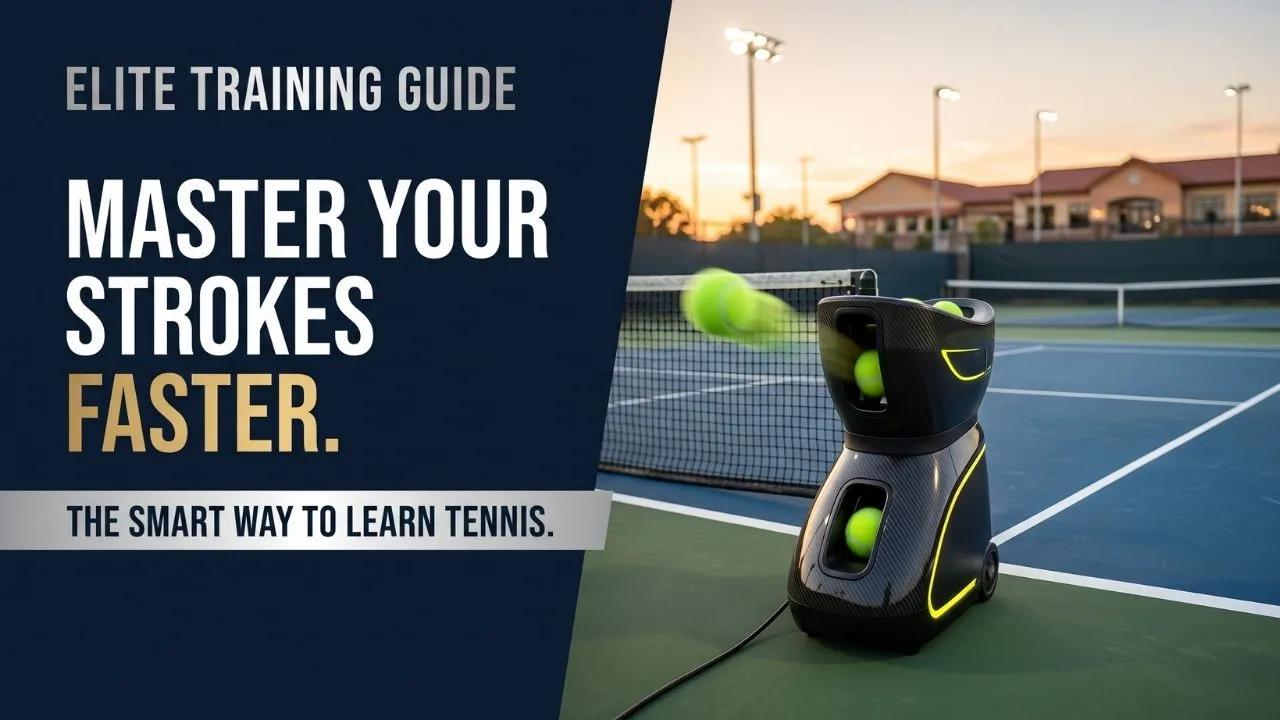

Choosing a tennis ball machine for the first time can feel a little overwhelming. There are plenty of models available, but beginners usually do not need the most powerful or feature-heavy option. What matters more is having a machine that is easy to operate, delivers balls consistently, and gives you enough control to practice different parts of your game.
A good beginner-friendly machine should help you work on basic strokes, footwork, timing, and consistency without making practice unnecessarily complicated. Portability, battery life, ball capacity, and adjustment options are also worth considering, especially if you plan to practice regularly.
What Should Beginners Look for in a Tennis Ball Machine?
Before choosing a machine, think about how you plan to use it. If you mainly want to practice groundstrokes, a straightforward model with adjustable speed, feed rate, and ball direction may be enough. Players who want to progress into more varied drills may prefer additional settings for spin, oscillation, or programmed sequences.
Some of the most useful features for beginners include:
- Adjustable ball speed: Allows you to start at a comfortable pace and increase the speed as your technique improves.
- Adjustable feed rate: Gives you enough time to prepare between shots, which can be helpful when learning a new stroke.
- Oscillation: Changes the direction of the balls so you can practice moving around the court rather than hitting from one position.
- Spin adjustment: Useful as you become more comfortable dealing with topspin and backspin.
- Portable design: Makes it easier to transport and store the machine.
- Good battery life: Helpful if you prefer longer practice sessions.
- Simple controls: Beginners should be able to adjust the basic settings without spending too much time figuring out how everything works.
Best Tennis Ball Machines for Beginners
There is no single tennis ball machine that will suit every beginner. The right choice depends on your playing level, budget, practice goals, and whether you need something lightweight or something that can support more advanced training later.
1. A Simple Entry-Level Ball Machine
For someone who is completely new to ball machines, a basic model can be a practical starting point. Look for one that offers adjustable speed and feed frequency along with straightforward directional control.
This type of machine can be enough for practicing forehands, backhands, volleys, and basic movement. The main advantage is that you can concentrate on your technique without being distracted by settings you may not need yet.
2. A Portable Tennis Ball Machine
A portable model can be useful for beginners who practice at different courts. A compact machine is generally easier to transport and store, particularly if you do not have much space at home.
When comparing portable options, do not focus only on weight. Consider the ball capacity, battery life, carrying options, and whether the controls are easy to reach and adjust.
3. A Machine With Oscillation
Once you become comfortable hitting balls from a fixed position, movement becomes an important part of practice. A machine with horizontal or random oscillation can send balls toward different areas of the court, encouraging you to move into position before each shot.
For beginners, this can help develop footwork, balance, and recovery habits while making practice more varied.
4. A Machine With Spin Controls
Spin can gradually be introduced as your technique develops. A machine with adjustable topspin and backspin can provide more variety and help you become comfortable responding to different types of shots.
However, more settings do not necessarily make a machine better for a beginner. If the controls are complicated, a simpler option may be easier to use and more suitable during the early stages of learning.
How Much Should a Beginner Spend?
The cost of a tennis ball machine can vary considerably depending on its features, construction, and capabilities. Before setting a budget, think about how frequently you are likely to use it.
If you only expect to practice occasionally, a basic machine may provide everything you need. If you plan to train several times a week, a more versatile option may be worthwhile because features such as oscillation, spin adjustment, and longer battery life can become more useful over time.
For example, PUSUN has several tennis and padel ball machines aimed at different levels, including options designed specifically for beginners and recreational players. Its PT-Smart model, for instance, is positioned as a value-oriented option with adjustable training capabilities. That said, beginners should still compare specifications, controls, portability, and price with other machines before making a decision.
The most expensive machine is not automatically the best choice. A reliable model that is easy to operate can be more useful than one packed with advanced features that you rarely use.
Are Tennis Ball Machines Worth It for Beginners?
They can be, particularly for players who want additional practice outside regular lessons or hitting sessions. A ball machine provides a consistent supply of shots, allowing you to repeat a particular stroke multiple times.
That repetition can help improve timing, confidence, and consistency. However, a ball machine should not completely replace practice with a coach or another player. Real matches involve unpredictable shots, decision-making, positioning, and tactical situations that a machine cannot fully reproduce.
For most beginners, the best approach is to use a ball machine as one part of a broader practice routine.
The best tennis ball machine for a beginner is usually one that is easy to operate, consistent, portable enough for your needs, and adjustable as your skills improve. You do not need every advanced feature from day one.
Start by considering the type of practice you want to do. If your priority is basic stroke repetition, keep things simple. If you want to develop footwork and gradually introduce more challenging drills, a machine with oscillation and additional adjustment options may be a better long-term choice.
Ultimately, the goal is not to find the machine with the longest list of features. It is to find one that fits naturally into your practice routine and gives you useful, repeatable practice without making the process unnecessarily complicated.